The Belfast Blunder: How an Unheralded Ireland Side Exposed India’s Rigid T20 Hierarchy
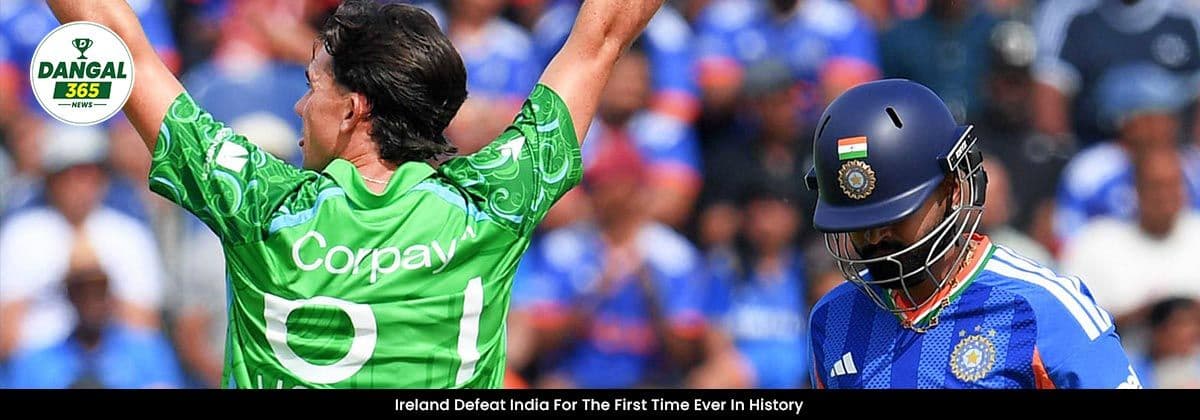
There is a distinct flavor of arrogance that creeps into a World Champion side when they play a bilateral series that feels like a post-it note on a busy calendar. India went to Belfast this week with a squad of World Cup winners, a newly minted trophy back home, and a selection strategy that looked more like bureaucratic box-ticking than tactical reality.
They left yesterday with a 2-0 series defeat, zero excuses, and a massive structural problem that an unheralded Ireland side laid bare in the space of forty-eight hours.
Dangal365 News watched both games unfold at Civil Service Cricket Club, and let’s be entirely transparent here: this wasn't a fluke or a bad day at the office. This was a tactical dismantling of a team that refused to adapt, executed by an Irish side that smelled complacency from the very first ball.
Game One: The Dismissal of Intent
On June 26, the warning signs weren’t just flashing; they were deafening. Ireland set a competitive but entirely chaseable 183, built on a gritty half-century from Lorcan Tucker and a brutal 49 from Gareth Delany.
What followed in the chase was a textbook example of how not to manage a modern T20 powerplay. India’s top order looked completely shell-shocked by a green Belfast deck that had some genuine bite. Sanju Samson was cleaned up first ball of the innings by debutant Jai Moondra, a moment that set the tone for the entire weekend. Matt Humpreys and the Irish seamers didn't bowl hyper-speeds; they just hit the hard length, extracted standard cross-seam bounce, and watched India’s heavily favored batting unit collapse under the weight of their own hesitation.
India fell 34 runs short, bowled out for a meager 148. The post-match press conference from the Indian camp was filled with standard platitudes about "adjusting to conditions" and "trusting the process." They didn't adjust. They didn't process.
Game Two: The One-Run Mirage
Yesterday, June 28, was supposed to be the correction. India won the toss, choked Ireland down to a highly restrictive 153, and looked completely on track to square the series. Bowl a side out for 153 in modern T20 cricket, and you expect your frontline batting unit to coast home.
Instead, the middle order completely disintegrated. The decision to leave teenage phenomenon Vaibhav Sooryavanshi on the bench for a second consecutive game went from questionable to downright indefensible as the innings wore on. India handed debuts to Prince Yadav and Suryansh Shedge instead. Shedge walked out in a pressure cooker environment, managed a solitary run off 5 balls, and looked completely out of his depth.
When Harshit Rana was run out on the final ball of the match trying to scrape the single that would have forced a Super Over, the scoreboard read 153 for 9. Ireland won by one run. A historic 2-0 sweep for the hosts, and the first time India has ever dropped a bilateral match, let alone a series, to Ireland in this format.
The Broadcaster’s Flip and the Selection Mess
The narrative shift around this series has been dizzying to watch. Sanjay Manjrekar, who spent the build-up to the first T20I defending the management's decision to preserve the World Cup-winning core, completely broke ranks before the second game. He called out the captaincy and Gautam Gambhir’s management for failing to realize that a T20 lineup isn't a museum piece, it’s a living, breathing entity that needs to adjust to form.
Manjrekar’s point was simple: if your top order is misfiring on a sticky wicket, you open with a raw boundary-hitter like Sooryavanshi and push Sanju Samson into the middle order where his experience can stabilize a collapse. The management chose institutional rigidity over tactical logic, and they paid for it with a historic humiliation.
India now rolls into a five-match T20I series against England with their invincibility completely shattered. The luxury of hiding behind a "settled combination" died in Belfast yesterday. Dangal365 News will be tracking the fallout from ball one in England, because if a 15-year-old kid doesn't get his cap after this disaster, the management is going to have a hard time explaining what they are actually building toward.
Written by
Team Dangal365News
Cricket correspondent at Dangal365 News.